Invisible hand · Business documentary

Who really decides a takeover bid?

17 Nov 2026 · EN

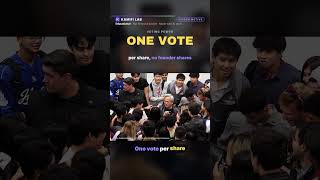
A takeover bid looks like a duel between two boards. One reading, built only from disclosed things, is that the decisions also run through a controlling family with about three-quarters of Quebecor's votes, Telus's institutional owners, a pension manager with a stake in Telus's towers company, and the regulators whose earlier rulings created the fourth national carrier. This is who the process runs through, not an accusation.

Key points

  • Quebecor has two share classes. The controlling family's multiple-voting shares carry roughly three-quarters of the votes. Telus holders would supply roughly half the economics of the combined company but hold under a quarter of the votes, per Quebecor's own documents.
  • Telus has had one share, one vote since 2013. Its biggest holders are large institutions, none with a controlling slice.
  • La Caisse, Quebec's pension manager, once co-owned Quebecor Media and later bought a near-half stake in Telus's tower business.
  • A tribunal and a court let Rogers buy Shaw, and Freedom went to Quebecor, which created the fourth national carrier. A reading, not an allegation.

Sources

Educational · Not financial advice Motives and scenarios are our readings, not predictions · Made with AI tools (AI voices and visuals)

More business documentaries

Hidden motive · 17 Nov 2026

Who is a public bid really for?

Quebecor, a company with under a third of Telus's revenue, made a cash-and-stock proposal at about 60% above the market price, and made it public after two private approaches. Telus's board says it does not reflect the company's value. One reading is that the audience includes shareholders and regulators, and that the aim is scale and control. A possible reason, not a known one.

What if · 17 Nov 2026

If this fight drags on, who else pays?

A scenario, not a prediction: what could be exposed if a takeover fight between two of Canada's four national wireless carriers drags on or advances. The debt load, the four-carrier policy, the rival carriers, customers' bills and tower investors all come into view. Our reading, built from company releases and reporting.

Mini-doc · 17 Nov 2026

The minnow that tried to swallow the whale: anatomy of a hostile bid

A mini-documentary in three acts about what happens when a smaller company names its price for a much bigger one. Quebecor, with roughly a third of Telus's revenue, proposed a cash-and-stock takeover at about 60% above the market price at the time. We follow the threat, the choices both boards may face, and the ripple effects, labelling every possibility and scenario as our reading, not a prediction.

Hidden motive · 16 Nov 2026

The real reason a founder walks away from a trillion-dollar empire

Nvidia's founder and CEO stepped down after thirty-three years, and the company's filing gives no reason. One reading is that the exit was less about one person and more about a board regaining control. It is a possible reason, not a known one.

What if · 16 Nov 2026

If a giant stumbles, who is tied to it?

A scenario, not a prediction: if a leadership crisis at the centre of the AI buildout deepened, the first to feel it would be the companies whose business is built on Nvidia's. Long supply agreements and rival chips are cushions, but not a full answer.

Invisible hand · 16 Nov 2026

When the founder is gone, who holds the power?

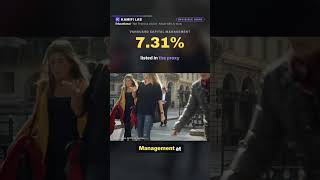
One reading: when a company has no controlling shareholder, no single hand holds the wheel. Nvidia's proxy filing shows one vote per share, a founder stake of about 3.6 percent and index fund managers listed at just over seven percent each. The invisible hand may be millions of ordinary savers.

All videos →

Explainers

Business stories · 17 Nov 2026

Is a founder a company's cure or its risk?

After Nvidia's founder stepped down, a petition of well over a hundred thousand names asked for his return. One reading is that the push says less about one man than about what supporters fear losing: the relationships a founder holds. The case against turns that around, since a company that cannot picture itself without one person is the key-person risk critics describe. Both sides are partly right, and the board had said nothing on the record about a return.

Business stories · 14 Nov 2026

Is the new Proton S70 RS more than a new look?

Proton has named its updated sedan the 2027 S70 RS, where RS stands for Refined Sportiness. It keeps the same 1.5-litre turbo and, Proton says, the same 7.5-second 0–100 km/h time, but gets a new face and a new cabin. Not sponsored; images from Proton's own press release.

Ranked / data lists · 14 Nov 2026

Does the top-yield ETF really pay the most?

A ranking by one number, not a recommendation. Among a list of the largest US-listed dividend and income ETFs (over $10B in assets, real estate funds left out), the five with the highest trailing 12-month yield on 13 Nov 2026 were JEPQ, SPYI, JEPI, VYMI and DVY. Yield is only part of a return: VYMI yielded less than half of JEPI's, yet its five-year total return was about double. Past results, not a promise.

Business stories · 14 Nov 2026

Was Jensen Huang's exit really a plot?

Jensen Huang resigned as Nvidia's CEO on 12 November 2026, four days after apologising to staff in a memo. One viral post claims it was a plan to seize the company. We checked the filings and major news reports and found no evidence of a plot.

Investor psychology · 14 Nov 2026

Does false news really travel faster?

An MIT study in Science found false news on Twitter was 70% more likely to be retweeted than true news, and true stories took about six times as long to reach 1,500 people. Psychologists add that big events can feel like they need big causes, one reason conspiracy stories stick.

Business stories · 14 Nov 2026

Is a company more than its founder?

Steve Jobs left Apple in 1985 and was back running it twelve years later. Uber and WeWork also lost their founder-CEOs suddenly. Three exits took three different paths; one way to read it is that what matters next is who runs the company and what they change.