Tesla (TSLA): AI bull vs bear

TSLA · US · data to 9 Nov 2026 · EN

The AI's view · Bearish lean · not a recommendation

A team of AI analyst agents, built on the open-source TradingAgents framework, looked at Tesla's price trend, news, fundamentals and sentiment, then argued the bull and bear case. This is what they said, using data up to 9 Nov 2026.

Bull case

  • $16.5B cash for the future
  • Back above its 50-day average
  • Self-driving data edge
  • An ecosystem, not price cuts

Bear case

  • 2025 sales shrank: $94.8B
  • Operating income halved
  • $8.5B capex vs $3.9B profit
  • High rates hit car buyers

What to watch next

Data 9 Nov 12
  1. 117Nov

    Nvidia Q3 results

    17 Nov 2026

    IfStrong AI demand → bull's case

    IfA softer outlook → bear's case

    + Google Calendar
  2. 29Dec

    Fed rate decision

    9 Dec 2026

    IfA rate cut → bull's case

    IfHigher for longer → bear's case

    + Google Calendar
Scenarios to watch, not predictions.

Quick lesson

200-day average = long-term trend. TSLA sits just under it.

Get the full notes PDF

The complete notes for Tesla: price trend, fundamentals, news, the full bull and bear debate and what to watch. Free, just leave your email.

We store your email to give you the notes and, only if you tick the box, the weekly recap. No spam, never sold. Privacy

Educational · Not financial advice The AI's view, not a recommendation

More AI stock analysis

All videos →

Explainers

AI & technology · 10 Nov 2026

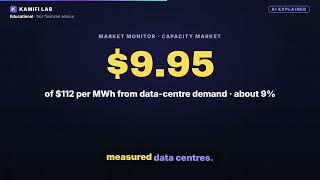
Is AI pushing up your power bill? Data centres, America's biggest grid and who pays

On PJM, America's biggest power grid, the total wholesale cost of power was about $112 per MWh in January–September 2026, up from about $79 in the same months of 2025 (+41%). The grid's independent market monitor estimates that data-centre demand added about $10 of that, through the capacity market only. How big a part data centres play in rising power costs is disputed.

World & economy · 9 Nov 2026

What do governments know? The risk lists behind "keep supplies at home"

95% of people in the EU say their country faces disaster risks, yet 58% don't feel well prepared (Eurobarometer 2024). Much of what governments plan for is published: Britain's 2026 National Risk Register scores 95 risks and sets out planning worst cases, not forecasts. Part 1 of 2.

World & economy · 9 Nov 2026

Could you last 72 hours at home? What governments do, and what you can do

Part 2 of 2. In a power cut a fridge keeps food cold for about 4 hours with the door shut, and a full freezer about 48 (UK Food Standards Agency, Ready.gov). This video answers four questions with official guidance only: what governments do first, what households can prepare, what to do during the event, and what to do if it lasts a week.

Geopolitics & markets · 7 Nov 2026

Why governments want you to keep 72 hours of supplies

On 28 April 2025, Spain lost power equal to about 60% of its demand in roughly five seconds, and nearly all of it was back by 7 a.m. the next morning. On 3 November 2026 the European Commission presented guidelines so that households can cover their basic needs for at least 72 hours. Why are governments asking, and what does it mean for shops, spending and insurers?

Scams & risk · 6 Nov 2026

Pump-and-dump: how it works and the red flags

In a case announced by the US Justice Department in November 2025, prosecutors say people posing as financial advisers drew investors into WhatsApp chats, promised returns of 300–500% and steered them into one Nasdaq-listed stock. On 17 April 2024 its price collapsed about 88% in a single day. These are charges, not a conviction.

Investor psychology · 5 Nov 2026

FOMO: why people buy after the big jump

In January 2021, GameStop went from under $20 to a $347.51 close on 27 January (pre-split prices), then fell more than 86% from its 28 January intraday high of $483 in about a week. Why do people chase a stock after a big jump?